
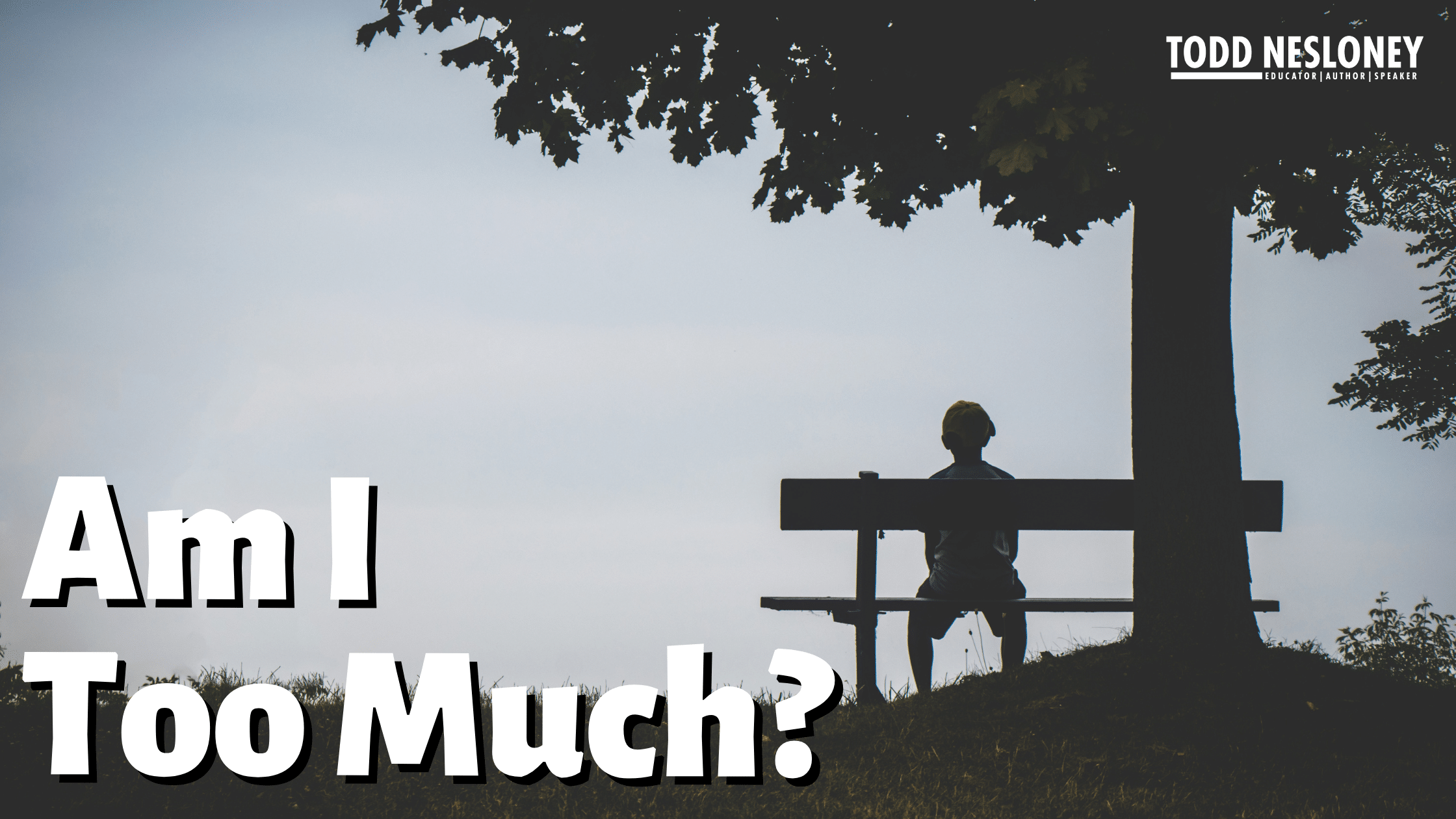

Am I Too Much?
I was having a conversation with a friend recently about leadership, working with people, friendships, and just how complicated relationships can be.
At one point, a sentence was said that stopped me: “I wonder if sometimes I’m just too much.”
I knew exactly what they meant. Because I think a lot of us have wondered that at some point.
Maybe we’ve watched other people seemingly build friendships effortlessly. They have the group text that never stops, the friends who have been around for decades, the people who always seem to get invited, included, remembered, and chosen. Meanwhile, some of us feel like relationships have always required a little more work.
We’ve had friendships fade without really understanding why. We’ve watched people we thought would be in our lives forever slowly disappear. We’ve wondered why we’re always the one reaching out first, checking in, or trying to keep the connection alive.
And eventually, if it happens enough, we start wondering: Maybe it’s me. Maybe I’m too much.
Too emotional. Too intense. Too complicated. Too needy. Too driven. Too sensitive. Too honest. Too much work.
Maybe if I were a little quieter, a little easier, a little less invested, a little less me, people would stay.
I think that’s where this gets dangerous. Because when we start believing we are too much, our natural response is often to become less.
We stop texting because we don’t want to bother anyone. We stop sharing what we’re really feeling because we don’t want to be a burden. We stop asking for what we need because we don’t want to seem needy. We stop showing excitement because someone once made us feel like we were a little too enthusiastic.
Little by little, we edit ourselves. Eventually, we can become so good at reading a room and adjusting who we are that we don’t even realize we’re doing it anymore.
But I’m learning there is a difference between growing and shrinking.
Growth says, “There are things about me I need to work on.”
Shrinking says, “There are things about me I need to hide.”
Those are not the same thing.
I also don’t think the answer is to simply say, “If people can’t handle me, that’s their problem.” Relationships require self-awareness, and sometimes we are exhausting. Sometimes we dominate conversations, expect more from people than they can give, cling too tightly, or allow our own hurt to affect the way we treat others.
Being authentic doesn’t mean refusing to grow. Good friends should be able to tell us when we’ve hurt them. Strong leaders should constantly examine how their behavior affects the people around them. There are parts of every one of us that need refining.
But needing to grow doesn’t mean you need to disappear.
I’ve also come to realize that some people simply won’t connect with us deeply. And that can hurt, especially when we really wanted them to.
People are different. They’re in different seasons. Some people have the capacity for deep connection right now, while others don’t. Some people want friendships that stay mostly on the surface while others crave conversations that go somewhere deeper.
Sometimes two really good people just aren’t meant to be close friends. Sometimes a relationship was incredibly important for one season and doesn’t continue into the next. Sometimes the person you desperately want to choose you simply won’t.
None of that automatically means there is something wrong with you.
I think leaders can struggle with this in a unique way too. Leadership requires us to care deeply while also making difficult decisions, to invest in people while knowing we won’t always be liked, and to encourage others while sometimes carrying things we can’t talk about publicly.
It can make friendship complicated too. People may know your title before they know your heart. You can find yourself wondering whether someone values you or simply values what you can do for them.
But leadership should never require you to become less human. You are still allowed to want people who check on you when they don’t need anything. You are allowed to want friendships where you don’t have to perform and people who know the person behind the position.
Maybe you’ve been asking the same question. Maybe you’ve wondered why relationships seem harder for you than they do for everyone else. You’ve replayed conversations, analyzed text messages, questioned invitations, or wondered why someone pulled away.
Keep growing. Keep listening. Apologize when you need to apologize. Pay attention to how you make people feel. Respect boundaries. Become more self-aware and do the work that healthy relationships require.
But don’t make yourself smaller just so someone else has an easier time holding you.
You may feel deeply. You may care intensely. You may have scars, insecurities, quirks, fears, dreams, and a story that requires a little patience to understand. That doesn’t make you too much. It makes you human.
So the next time that quiet question creeps in, “What if I’m just too much?”, maybe ask a different one:
“Am I growing into the healthiest version of myself, or am I shrinking into the version of myself I think other people will accept?”
Because there’s a difference between becoming better and becoming smaller.
And you were never meant to spend your life becoming smaller just to make yourself easier for someone else to hold.